




Research the RootThe Microbiome + CancerIssue 11.0
What Cancer Research Is Revealing About the Microbiome and Immune System
How gut microorganisms influence immune activity, inflammation, and cancer treatment response, and why this conversation matters long before a diagnosis.
Read the full article
What Cancer Research Is Revealing About the Microbiome and Immune System
Most of us first learn about cancer at the moment it is found.
A scan shows something unusual. A biopsy gives it a name. And because diagnosis is the first moment the disease becomes visible, cancer can feel as though it appeared all at once.
But diagnosis isn’t where cancer began.
Cancer develops through a series of biological changes that allow an abnormal cell to continue growing when it should stop, survive when it should die, avoid the immune system, recruit the resources it needs, and sometimes invade surrounding tissue or spread elsewhere in the body.
That process doesn’t happen inside the cell alone.
It happens within an entire biological environment that includes the immune system, inflammatory signaling, hormones, metabolism, blood vessels, surrounding tissue, inherited genetics, environmental exposures, and, as a growing body of research is now revealing, the microbiome.
This of course, means the microbiome isn’t the single cause of cancer.
But it’s one of the biological systems capable of influencing the environment in which cancer begins, grows, and responds to treatment.
And that makes it part of the cancer conversation.
Cancer Is More Than a Cell Growing Too Quickly
Cancer is often reduced to the idea of uncontrolled growth, but speed alone isn’t what makes a cell cancerous.
Healthy cells respond to instructions.
They divide when new cells are needed. They stop dividing when they receive signals to stop. When they become damaged beyond repair, they enter a controlled process of cellular death so they can be removed and replaced.
Cancer cells stop following those rules.
They can grow without the signals that normally tell cells to divide. They can ignore the signals telling them to stop. They can resist cellular death, manipulate immune cells, recruit blood vessels, invade surrounding tissue, and travel to other areas of the body.
And cancer isn’t one single disease.
There are more than 100 types of cancer, and each can involve different genetic changes, tissues, exposures, immune responses, and microbial influences.
That matters because there will never be one explanation for every cancer.
Abnormal Cells Aren’t Automatically Cancer Cells
You may have heard the statement that everyone has cancer cells in their body.
That isn’t quite accurate.
What’s true is that cells are constantly dividing, responding to stress, encountering environmental exposures, and sustaining damage. Errors can occur as DNA is copied, and cells can become abnormal.
But an abnormal or damaged cell isn’t automatically cancer.
The body has multiple systems designed to repair DNA, stop damaged cells from reproducing, trigger cellular death, and allow the immune system to identify and remove cells that no longer belong.
Most damaged cells never become cancer.
Cancer develops when a cell accumulates changes that allow it to escape enough of these protective systems and continue reproducing.
Those changes can arise from inherited genetic variations, random errors during cellular division, aging, infections, radiation, tobacco smoke, environmental exposures, and other influences. Usually, cancer develops through an accumulation of changes rather than one isolated event.
This is why cancer prevention can’t be reduced to one food, one toxin, one habit, or one supplement.
And it’s also why the health of the systems responsible for cellular repair, immune recognition, inflammation, and metabolic regulation are so important.
Your Immune System Does More Than Fight Infections
Most people think about the immune system when they have a virus, fever, allergy, or infection.
But the immune system is also continually monitoring the body’s own cells.
Immune cells look for signs that a cell has become infected, damaged, or abnormal. When they recognize a threat, they can mark that cell for destruction, attack it directly, or coordinate a wider immune response.
This process is often described as immune surveillance.
Cancer cells, however, can develop ways to avoid it.
Some stop displaying the signals that would make them visible. Others release chemical messages that suppress immune activity or recruit immune cells that actually protect the tumor. Some take advantage of the body’s natural immune checkpoints, which normally prevent the immune system from attacking healthy tissue.
Cancer immunotherapy exists because researchers learned how powerfully tumors can manipulate these immune brakes.
Checkpoint inhibitors don’t attack cancer in the same way chemotherapy does. They help release specific restraints on the immune system so it can recognize and respond to cancer cells more effectively.
But not everyone responds to immunotherapy in the same way.
And this is one of the places where microbiome research has become especially important.
Inflammation Protects the Body Until It Doesn’t Turn Off
Inflammation isn’t inherently harmful.
It’s how the immune system responds to infection, injury, damaged tissue, and other threats. It brings immune cells and repair signals into an area that needs help.
A short-term inflammatory response is part of healing.
The problem is chronic, unresolved, or poorly regulated inflammation.
When inflammatory signaling remains active, it can expose tissues to substances that damage DNA, affect cellular communication, change immune behavior, and alter how surrounding cells grow and repair themselves.
Cancer cells can also use inflammatory pathways to support their own survival, recruit blood vessels, remodel nearby tissue, and suppress an effective immune response.
This doesn’t mean inflammation always causes cancer. It means chronic inflammation can become one part of the environment that allows certain cancers to develop or progress. And because inflammation can both fight cancer and support it, the relationship is far more complex than simply trying to eliminate all inflammation.
The goal is appropriate inflammation.
We need an immune system capable of responding powerfully when a threat is present and capable of regulating that response when the threat has passed.
The microbiome helps teach it how to do both.
The Microbiome Helps Educate and Regulate the Immune System
An estimated 70 to 80% of the body’s immune cells are located in or associated with the gut.
That isn’t a coincidence.
The digestive tract sits at the boundary between the body and everything moving through it. Food, microorganisms, toxins, medications, pathogens, and microbial compounds continually interact with the intestinal barrier.
The immune system has to determine what is nourishing, what is harmless, what belongs, and what requires a response.
And the microbiome helps it make those decisions.
Beneficial microorganisms support the mucus layer and intestinal barrier. They compete with organisms that can become harmful. They produce metabolites that communicate directly with immune cells, influence inflammation, and travel beyond the digestive tract.
The microbiome helps train immune cells to recognize what is dangerous without overreacting to what is safe. It helps the immune system mount an appropriate response when a threat is present and return to regulation once that threat has passed.
And the communication moves in both directions.
The immune system also shapes the microbiome by influencing which organisms are allowed to remain, where they live, and how the body responds when one population begins growing beyond what the ecosystem can support.
When 70 to 80% of the body’s immune cells are living in or around the gut, immune health can’t be separated from the health of the microbiome surrounding them.
When the microbiome becomes imbalanced, meaning the body has too much bad bacteria, yeast, mold, fungus, or parasites and not enough good bacteria, the environment those immune cells depend on changes.
The intestinal barrier becomes more vulnerable. Microbial metabolites change. Inflammatory signaling can remain activated. And the immune system loses part of the microbial support it depends on to recognize threats, regulate its response, and protect the body effectively.
That doesn’t mean gut imbalance automatically creates cancer.
It means the microbiome directly influences the immune and inflammatory systems cancer biology depends on.
The Microbiome Can Influence Cancer in More Than One Way
Cancer and microbiome research isn’t limited to the idea that one bacterium causes one tumor.
Researchers are studying several different pathways.
Microorganisms can interact directly with nearby tissue. Some can produce toxins or other compounds that damage DNA, alter cellular signaling, or contribute to inflammation.
The microbiome can also influence cancer indirectly through immune regulation, intestinal-barrier integrity, hormone metabolism, nutrient availability, bile acids, and other microbial metabolites circulating throughout the body.
And once cancer is present, microorganisms can influence the tumor environment itself.
Some microbial communities appear to support immune activity against tumors. Others may contribute to immune suppression, inflammation, or treatment resistance. Microorganisms can even change how certain medications are metabolized and how the body tolerates or responds to cancer treatment.
This is why researchers aren’t studying only the bacteria found inside a tumor.
They’re also studying the gut microbiome, because intestinal organisms can send metabolic and immune signals throughout the entire body.
Some Microbial Connections Are Established. Others Are Still Emerging.
It’s important to separate what research has established from what it’s still investigating.
The clearest example is Helicobacter pylori.
Chronic infection with certain strains of H. pylori can create long-term inflammation and changes in the stomach lining. It’s recognized as a cause of gastric adenocarcinoma and gastric MALT lymphoma, although most people carrying H. pylori won’t develop either cancer. Treating the infection can reduce stomach cancer risk in certain populations.
Researchers are also studying Fusobacterium nucleatum in colorectal cancer.
A specific subtype has been found more frequently in colorectal tumors and in the stool of people with colorectal cancer. Laboratory and animal research suggests it may help tumors grow and create a more immune-suppressive environment, but researchers are still determining whether it helps initiate cancer, supports a tumor after it develops, or does both in certain people.
These examples show that specific microorganisms can participate in cancer biology through specific mechanisms.
But don’t be mistaken. The idea should never be to aggressively attempt to eliminate every microorganism.
The goal is a balanced microbial environment with enough beneficial bacteria to maintain the intestinal barrier, regulate immune activity, and keep potentially harmful organisms from growing beyond what the body can support.
The Gut Microbiome Can Affect How Some Cancer Treatments Work
Some of the most compelling microbiome research isn’t about what causes cancer.
It’s about why two people with the same diagnosis and the same treatment can respond differently.
In studies of people receiving immune checkpoint inhibitors for melanoma, researchers found differences in the gut microbiomes of those who responded to treatment and those who didn’t. Responders tended to have greater microbial diversity and more of certain bacterial groups associated with stronger immune activity inside tumors.
Researchers then began asking whether changing the microbiome could change treatment response.
In one small proof-of-concept trial, people with advanced melanoma who hadn’t previously responded to anti-PD-1 immunotherapy received fecal microbiota transplants from patients who had responded, followed by another course of immunotherapy. Six of the 15 participants experienced tumor reduction or long-term disease stabilization.
That’s an extraordinary finding, but it was a small, early trial. It doesn’t mean fecal transplants are an established cancer treatment. (Although this is definitely a route I would personally go).
It does demonstrate something important.
The microorganisms living in the gut can influence immune activity far beyond the digestive tract.
The Probiotic Matters, and So Does the Environment It Enters
Once people understand that the microbiome can influence immune activity and cancer treatment, reaching for a probiotic makes sense.
But not every probiotic works the same way, and a probiotic can’t correct a complete microbial imbalance by itself.
What the research shows is that “probiotic” isn’t one uniform intervention. The strains matter. Their ability to survive digestion matters. The environment they enter matters. And during active cancer treatment, the interaction between the microbiome, immune system, and treatment matters.
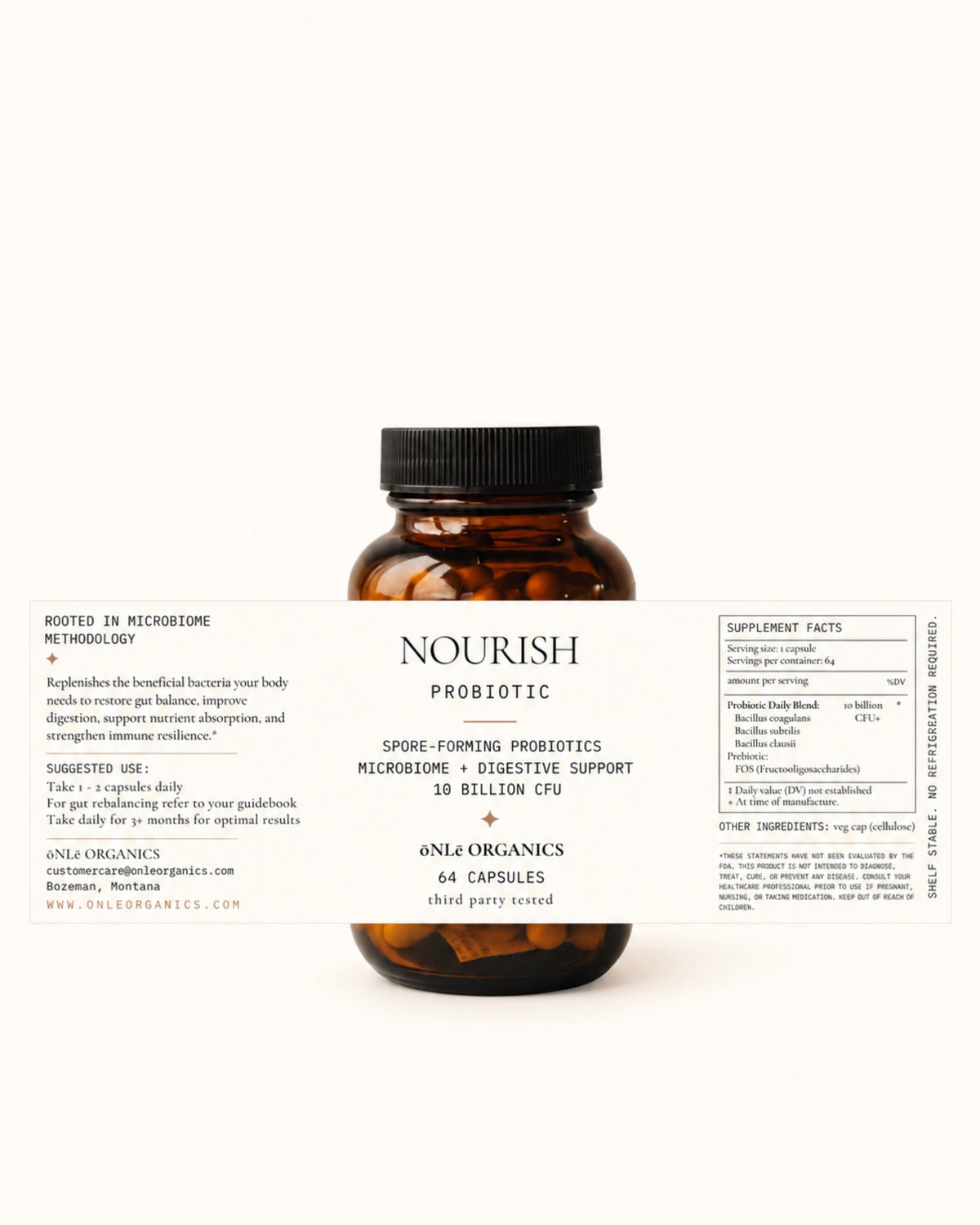
Nourish is an intelligent spore-forming probiotic designed to survive the digestive process and reach the gut.
The strains inside Nourish don’t only introduce the beneficial bacteria contained in the capsule. They respond to the microbial environment they enter and support the beneficial organisms already living there, including the good bacteria that have become depleted or are struggling to grow in abundance.
That is exactly why Nourish is an essential part of the ōnlē Gut Rebalance Method.
What This Research Does Not Mean
This research doesn’t mean gut imbalance is the single cause of cancer.
It doesn’t mean a person created cancer by eating the wrong foods, experiencing stress, taking antibiotics, or failing to care for the microbiome perfectly.
It doesn’t mean restoring the gut can make someone cancer-proof.
And it doesn’t mean gut support can replace screening, imaging, biopsies, surgery, chemotherapy, radiation, immunotherapy, or any other medically appropriate treatment.
Cancer is influenced by many factors, including age, inherited genetics, random cellular errors, infections, hormones, environmental exposures, immune function, metabolism, the food you eat, the products you use, chronic stress, and many other influences we’re still learning to understand.
A person can take extraordinary care of their health and still develop cancer.
Another person can neglect their health and never receive a diagnosis.
Biology doesn’t offer guarantees.
But the absence of a guarantee doesn’t make foundational health meaningless.
There is a massive difference between claiming we can control every possible cancer outcome and intentionally supporting the systems the body uses to regulate inflammation, metabolize hormones, repair cellular damage, recognize abnormal cells, and protect itself every day.
This Is What I Meant When I Said I Knew I Was Going to Lose My Son
When I say I knew I was going to lose my son, this is exactly what I mean.
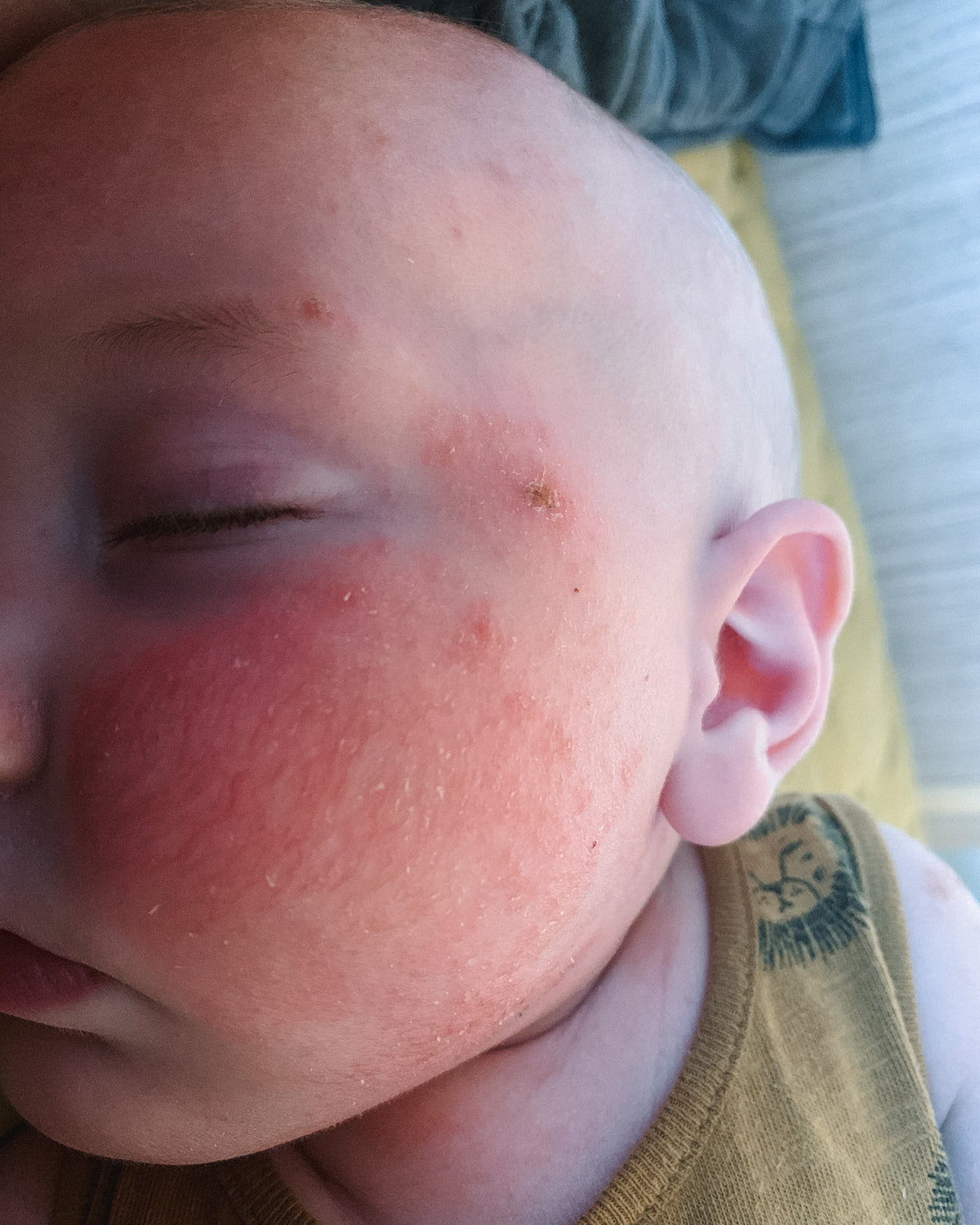
His whole body was inflamed.
He had extreme eczema, colic, reflux, severe allergies, behavioral issues, developmental delays, and an inability to sleep or have healthy bowel movements. His poop was full of undigested food and always smelled incredibly sour.
These weren’t separate problems occurring inside separate systems.
His entire body was communicating that something was deeply wrong inside.
And I knew that if I didn’t get to the root of what was causing all of it, that root would continue becoming more severe. The symptoms might change. New diagnoses might be added. Different specialists might give each one a different name.
But the process underneath them would still be there.
I knew with everything in my body that he was going to get cancer.
That wasn’t a medical diagnosis, and I’m not saying every child with eczema, reflux, allergies, or digestive problems will develop cancer.
I’m telling you what I knew while watching every system in my child’s body communicate distress.
I wasn’t willing to wait until that communication became a diagnosis everyone else considered serious enough. I needed to understand what was creating the inflammation, immune dysfunction, digestive breakdown, and complete loss of microbial balance underneath it.
That search led me to his microbiome.
And once I understood how deeply the microbiome influences the immune system, inflammation, digestion, nutrient absorption, neurological communication, and the body’s ability to protect itself, I couldn’t unsee it.
This Is Why My Family’s Microbiome Health Is Non-Negotiable
There is an extraordinary amount of money, intelligence, energy, and research poured into cancer once it exists.
And I’m grateful for that work. Cancer research, early detection, and new treatments save lives.
But most of the public conversation still begins after a mass has been found, after the biopsy, or after cancer cells have already learned how to avoid the body’s protective systems.
What about everything happening before that?
What are we doing while the immune system is monitoring abnormal cells, inflammation is either resolving or remaining activated, hormones are being metabolized, nutrients are being absorbed, damaged cells are being repaired, and the microbiome is communicating with all of it?
Cancer-prevention research does exist. Researchers are studying how genetics, immunity, inflammation, hormones, the microbiome, environmental exposures, and behavioral factors influence cancer risk before a diagnosis occurs. But most families still aren’t taught how to care for these systems in their everyday lives.
We’re taught to look for cancer.
We aren’t taught nearly enough about how to support the body before there is something to find.
That is why my family’s microbiome health is non-negotiable.
Not because I believe a balanced microbiome gives us perfect control over cancer.
But because I’m not willing to ignore a system that directly influences immune regulation, chronic inflammation, hormone metabolism, nutrient absorption, elimination, sleep, mental health, and the internal environment surrounding every cell in the body.
We rebalance when there is an imbalance.
And once balance has been restored, we intentionally maintain it.
We don’t wait for the body to become overwhelmed enough to create another diagnosis before we begin paying attention.
Caring for the Microbiome Changes More Than Digestion
A balanced microbiome changes the environment in which the entire body is functioning.
It gives the intestinal barrier the beneficial bacteria it needs to remain strong and protective.
It supports the immune system in recognizing what is dangerous, tolerating what is safe, mounting an effective response, and returning to regulation when that response is no longer needed.
It supports hormone metabolism and the body’s ability to process and eliminate hormones rather than continually recirculating what should have left.
It supports digestion and nutrient absorption so the body can actually access the vitamins, minerals, fats, proteins, and carbohydrates being consumed.
It supports regular bowel movements so hormones, waste, toxins, and microbial material aren’t sitting inside the body longer than they should.
It influences the gut-brain communication involved in nervous-system regulation, stress, anxiety, circadian rhythms, and sleep. And that relationship moves in both directions. The microbiome affects sleep-related pathways, and inadequate or disrupted sleep changes the microbiome and immune system in return.
It also changes the communication surrounding food.
The organisms living inside the gut and the metabolites they produce participate in appetite, fullness, reward, and nutrient-seeking behavior. The food we eat feeds particular organisms, and those organisms participate in the communication influencing what sounds satisfying next.
This doesn’t mean every craving is caused by an organism.
But it does mean cravings aren’t happening separately from the internal microbial environment.
When bad bacteria, yeast, mold, fungus, or parasites have become too abundant, the compounds and communication coming from that environment are part of what the brain is receiving. The foods feeding those overgrowths can become the foods that feel the hardest to stop reaching for.
As the microbial environment changes, that communication changes too.
Many women notice that the constant desire for sugar and heavily processed food begins to lose its intensity. Nourishing foods begin to sound good because the body is no longer receiving the same internal communication from the overgrowths that were being fed by the old pattern.
This isn’t simply about willpower.
Your food changes your microbiome, and your microbiome participates in the biological communication influencing your food choices.
That cycle can keep an imbalance going.
And it can also become part of how the body returns to health.
Rebalancing Restores the Environment. Maintenance Continues to Protect It.
When the body has too much bad bacteria, yeast, mold, fungus, or parasites and not enough good bacteria, taking a probiotic alone doesn’t correct the complete imbalance.
The overgrowths need to be cleared while beneficial bacteria, mineral status, digestion, elimination, and the intestinal environment are being restored.
That is what the ōnlē Gut Rebalance Method is designed to do.
Cleanse targets the bad bacterial, yeast, mold, fungal, and parasitic overgrowths the body has too much of while preserving the beneficial bacteria the microbiome needs.
Nourish replenishes beneficial spore-forming bacteria and supports the wider microbial community responsible for digestion, intestinal-barrier integrity, immune regulation, nutrient absorption, and keeping overgrowths controlled.
Bind supports the body in carrying out the overgrowths, toxins, heavy metals, waste, and other unwanted material being released.
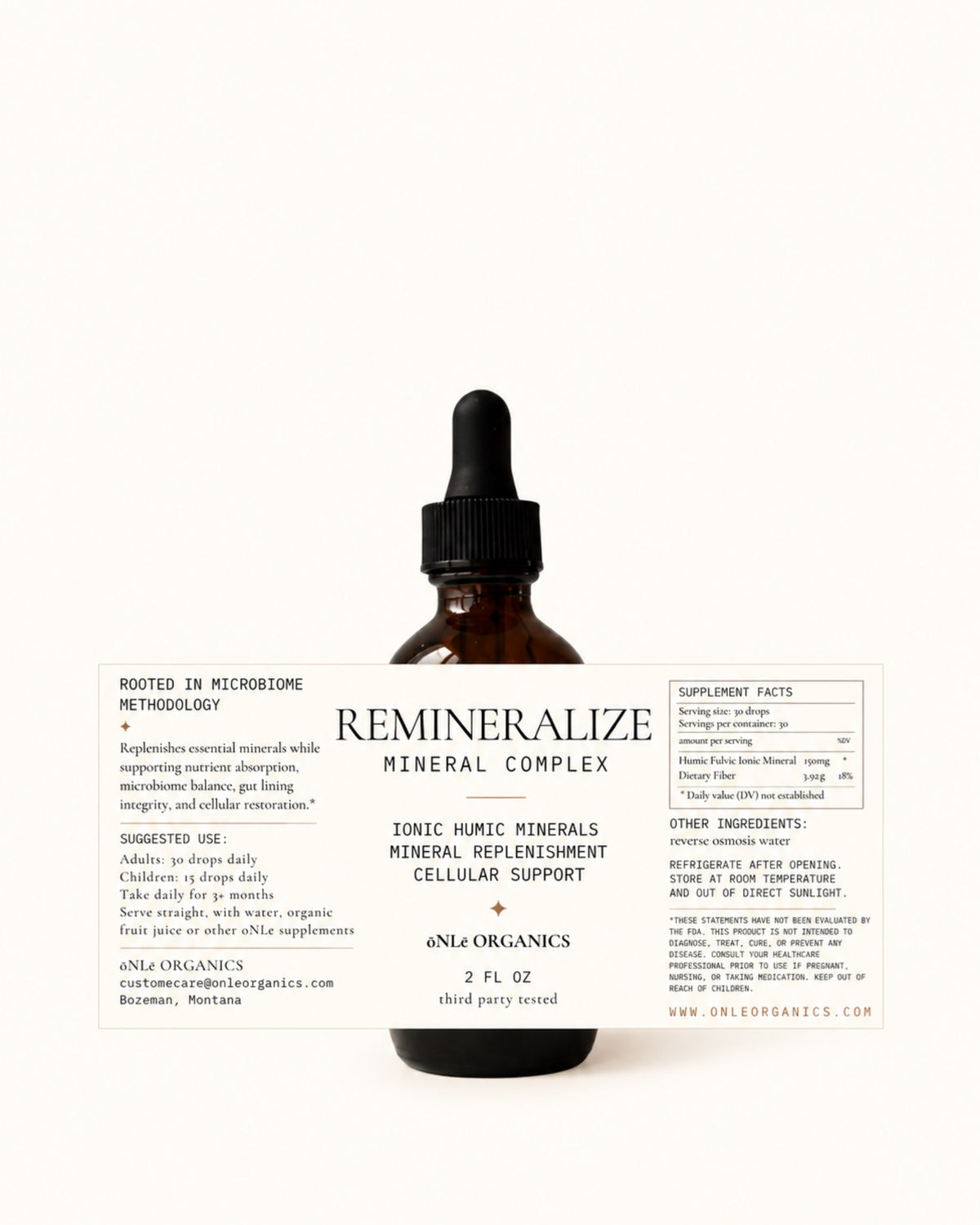
Remineralize restores essential minerals involved in hydration, digestion, bowel regularity, nervous-system communication, tissue function, cellular processes, and immune health.
And the supplements aren’t the complete methodology.
The course teaches you how to prepare the body, support the drainage pathways, keep the bowels moving, use food to stop feeding bad overgrowths, support the nervous system, and understand what the body is communicating throughout the process.
The goal isn’t to treat cancer.
The goal is to restore the microbial environment influencing the immune, inflammatory, hormonal, digestive, metabolic, and neurological systems the body depends on long before a cancer diagnosis ever exists.
And rebalancing isn’t something we complete once and then never think about again.
The microbiome continues responding to food, illness, antibiotics, medications, pregnancy, hormones, stress, sleep, travel, water, environmental exposure, and everything else moving through our lives.
Once balance has been restored, you move into maintenance. That means continuing your ōnlē supplements at their maintenance amounts while caring for the ecosystem through nourishing food, hydration, minerals, regular bowel movements, movement, sleep, nervous-system support, and environmental awareness.
We don’t eat one nourishing meal and assume the body is permanently nourished.
We don’t exercise for 64 days and assume the body will remain strong without ever moving again.
And we don’t complete a rebalance, stop supporting the microbiome entirely, and assume nothing will ever disrupt it again.
Rebalancing clears what has become overgrown and replenishes what has been depleted.
The maintenance supplements help protect the balance that has been created as the microbiome continues responding to food, illness, medications, hormones, stress, travel, and everyday environmental exposures.
Cancer Research Is Expanding the Conversation
For a long time, cancer research focused primarily on the tumor.
Then researchers began looking more closely at the immune system surrounding it.
Now they’re examining the microorganisms, metabolites, inflammatory signals, hormones, environmental exposures, and tissue conditions influencing both.
Some relationships are established. Some are promising. And some have only been observed in particular cancers, treatments, or populations.
But the direction is clear.
Cancer doesn’t develop in a biological vacuum.
The altered cell matters. Genetics matter. Exposures matter. The surrounding tissue matters. And the immune and microbial environment in which that cell is trying to survive matters too.
Early detection matters.
Cancer treatment matters.
And the biological environment that exists before a diagnosis matters.
We can’t control every gene, exposure, infection, or cellular error. But we also aren’t powerless inside our everyday lives.
We can care for the microbiome supporting immune surveillance, inflammatory regulation, hormone metabolism, nutrient absorption, sleep, elimination, and the body’s continual work of protecting itself.
Understanding that doesn’t give us another reason to be afraid.
It gives us a more complete understanding of the body we’re caring for and something meaningful we can begin doing now.